
Breaking Free from a Toxic Relationship: Healing and Recovery with Stephanie McPhail
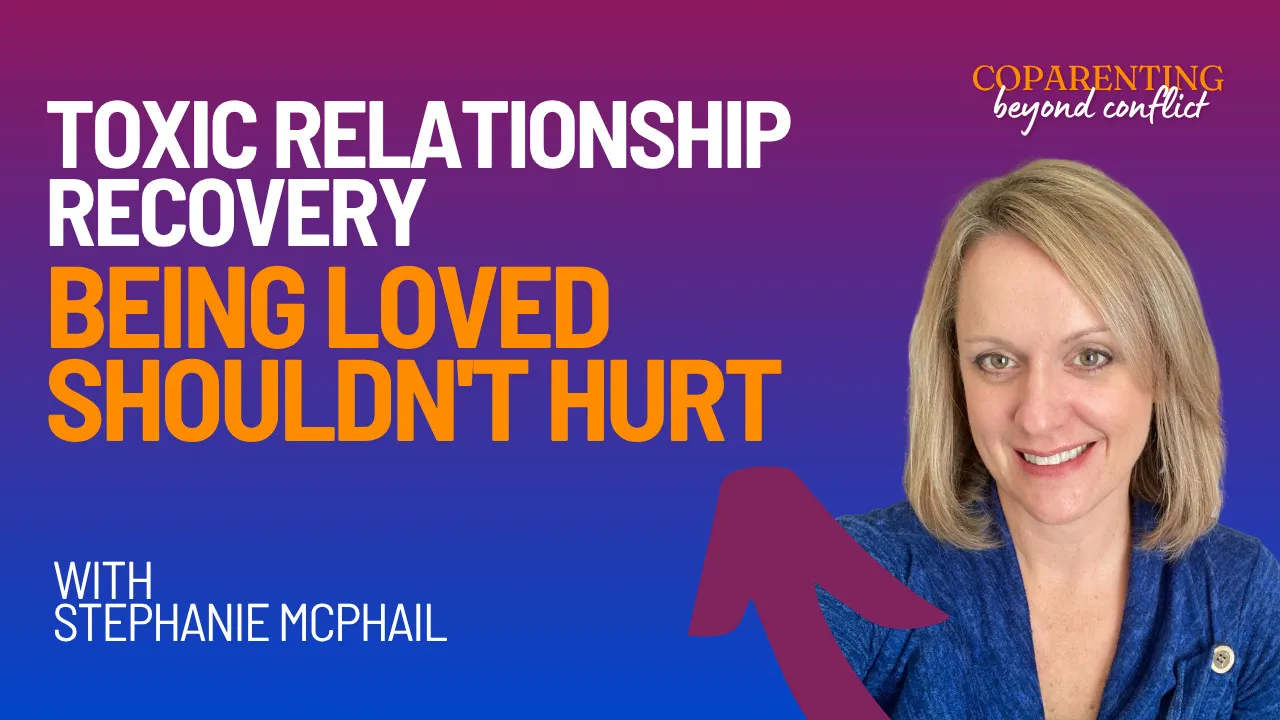
Have you ever asked yourself—why do I keep ending up in the same kind of bad relationship?
You’re not alone. So many of us, especially empathetic, high-achieving women, find ourselves trapped in cycles of unhealthy love. We want to help. In this Co-Parenting Beyond Conflict podcast episode, I sat down with Stephanie McPhail, certified coach, toxic relationship recovery expert, and author of Being Loved Shouldn’t Hurt, to explore how we can finally break free, heal, and build the healthy lives—and relationships—we deserve.
Stephanie’s personal story includes surviving an abusive marriage, rebuilding from the ground up, and now helping thousands of women do the same. Her insight is raw, relatable, and packed with real strategies that work.
Watch the episode and clips
Why Toxic Relationships Are So Hard to Leave
Stephanie shared that, like many of her clients, she used to confuse intensity with intimacy. “I was really good at choosing the wrong partners and trying to make it work,” she admits. Raised in a family with constant conflict, she thought love meant chaos—and so that’s what she kept recreating.
Even after enduring physical abuse on her wedding night, Stephanie stayed. And not because she didn’t know better—but because she thought she had to prove herself. “People didn’t know what I was dealing with behind the scenes,” she explained. “I felt like I had to keep it together. I wanted to believe he could change.”
This is a common trap in toxic relationships, especially for women who are givers, nurturers, and over-achievers. Codependent tendencies, combined with a lack of boundaries and deep empathy, make it easy to fall into the role of fixer.
But as Stephanie puts it: “You can be understanding without enabling someone to hurt you.”
How Stephanie Healed—and Now Helps Other Women Heal
Stephanie’s journey from surviving to thriving began with one small but powerful realization: “You need to be your own knight in shining armor.”
That moment set her on a path of deep self-discovery, personal growth, and transformation. Now a certified coach and reiki practitioner with a double master’s degree in health and education and a background in psychology, she uses her personal story and professional training to help women heal from toxic relationships.
She’s also a certified crisis counselor and part of the core counsel of experts for AVAIYA, with her book and workbook, Being Loved Shouldn’t Hurt, becoming a #1 new release on Amazon.
Her ideal client? High-achieving, professional women who are ready to stop playing small and finally reclaim their best life.
The Power of Boundaries (Even If You Co-Parent With a Narcissist)
We dove into one of the most difficult dynamics: co-parenting with a narcissistic or high-conflict ex.
Stephanie’s advice? “Stop trying to diagnose your ex. Instead, focus on how you feel in your body around them—and set firm boundaries accordingly.”
Her coaching clients often struggle with communication triggers and manipulation. One client was repeatedly lured into emotional traps via text by her ex. Stephanie’s guidance? Set communication boundaries and stop engaging when the conversation turns toxic.
This is exactly where BestInterest can help. Our AI moderation helps filter out negativity so you can communicate more calmly, document everything, and stay grounded—even if your ex is testing every limit. As Stephanie described, “Your ex is like a velociraptor testing the fence. Stop reacting. Hold the boundary.”
How to Know You’re Really Healing
One of Stephanie’s most powerful insights came when she described realizing what love should feel like:
“I was at a concert and suddenly felt this overwhelming calm. That’s when I knew—love should feel calm. Not butterflies. Not anxiety. Calm.”
That’s the difference between toxic love and healthy relationships—and it starts with the importance of self-love.
Stephanie’s message: You deserve calm. You deserve peace. You deserve love that lifts you up, not tears you down.
Real Tools to Support Your Healing
Stephanie recommends a multi-pronged approach to healing from toxic relationships:
- Therapy or Coaching: Work with someone trained in toxic relationship recovery who can hold you accountable and offer outside perspective.
- Tech Support: Use apps like BestInterest to reduce emotional reactivity and protect yourself in co-parenting communication.
- Journaling or Workbooks: Her book and workbook, Being Loved Shouldn’t Hurt, guides readers through self-reflection and boundary setting.
- Somatic Awareness: Learn to listen to your body. Notice when you feel anxious, shut down, or overstimulated. Your nervous system is trying to protect you.
- Community: Stephanie runs the Divorce Support Network, a free online community designed to connect women with local experts and support systems.
What Stephanie Would Tell Her Past Self
If she could go back to her lowest point, here’s what she’d say:
“You’re not letting anyone down by leaving. You’re letting yourself down by staying. The life you deserve is waiting—but you have to take that first step.”
How to Work With Stephanie McPhail
Stephanie works with clients around the world and offers free resources, coaching, and events through the Divorce Support Network. You can:
- Visit her site: beinglovedshouldnthurt.com
- Email her directly: stephanie@beinglovedshouldnthurt.com
- Follow her on Instagram and join the private Facebook group to connect with other women who are ready to break the cycle and heal.
Bottom Line: You Can Heal, Reclaim Your Life, and Thrive
Whether you’ve left a toxic relationship, are navigating a divorce or breakup, or are still figuring out if you’re ready—you are not alone. Stephanie McPhail’s story proves that even the darkest chapters can lead to the brightest futures.
You can break free. You can heal. You can rebuild. And you can thrive.
And if you need support along the way, BestInterest and experts like Stephanie are here to help you find your calm, set your boundaries, and step into your power.
FAQs: Toxic Relationship Recovery with Stephanie McPhail
Who is Stephanie McPhail?
Stephanie is a toxic relationship recovery expert, certified coach, crisis counselor, and author of Being Loved Shouldn’t Hurt. She specializes in helping professional women heal from toxic relationships and rebuild their lives.
What is the Being Loved Shouldn’t Hurt book about?
Being Loved Shouldn’t Hurt is both a book and workbook that guides women through self-reflection, boundary setting, and reclaiming their self-worth after emotional or physical abuse.
Can Stephanie help me if I’m not yet divorced?
Yes. Whether you’re considering leaving or already separated, Stephanie supports women at every stage of the journey.
How can BestInterest help in toxic co-parenting situations?
BestInterest offers AI moderation, boundary tools, and communication filters that help you stay calm and free from toxic emotional traps—especially if you’re co-parenting with a narcissist or high-conflict ex.
What’s the next step if I’m ready to break free from toxic love?
You can connect with Stephanie for a breakthrough call or join the Divorce Support Network. And don’t forget to try the BestInterest app, which can make all the difference in how you handle conflict moving forward.