
Protecting Your Children in High Conflict Co-Parenting with Jill Barnett Kaufman
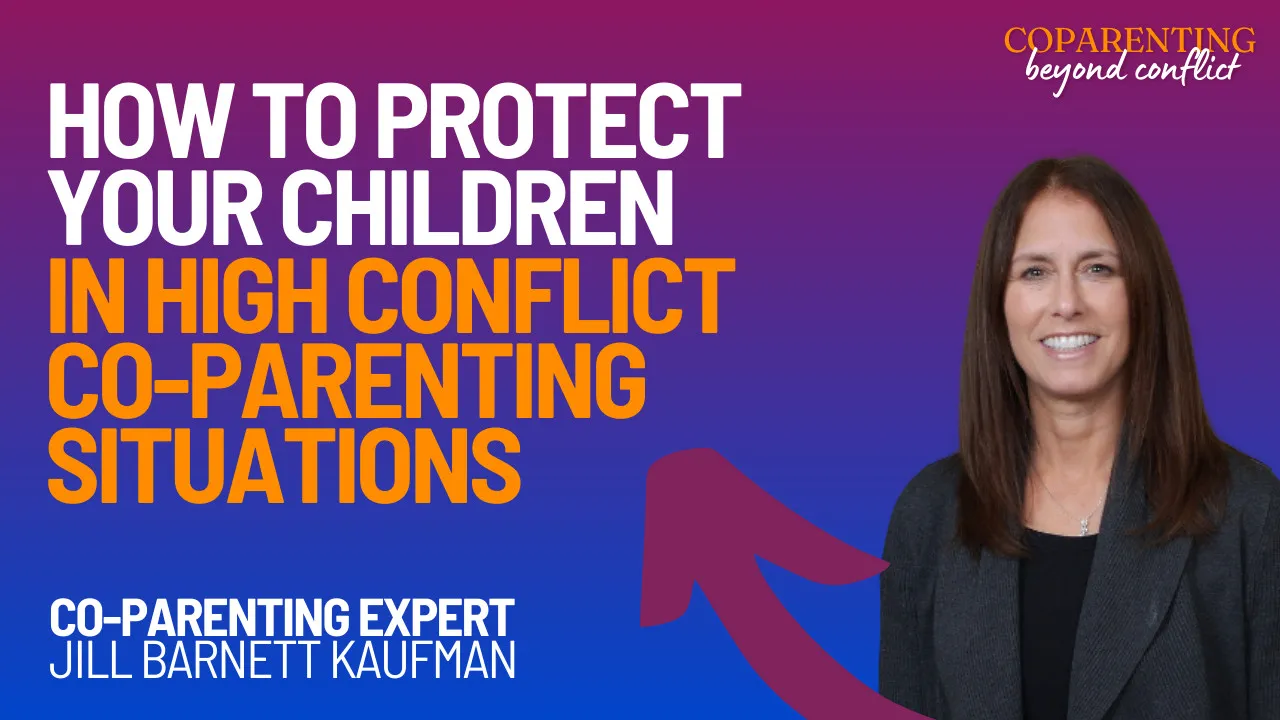
Divorce is one of life’s most challenging transitions, especially when children are involved. On a recent episode of the Coparenting Beyond Conflict podcast, I welcomed Jill Barnett Kaufman—licensed therapist, divorce coach, mediator, and co-parenting expert—to share her wealth of knowledge. Jill’s personal experience of navigating a difficult divorce informs her mission to guide others through the process with less stress, more confidence, and a greater sense of peace.
Here are some of the key takeaways from our conversation:
Watch the episode and clips
Reframing Co-Parenting: From Spouses to Colleagues
One of the most profound shifts Jill highlighted was the need to reframe your relationship with your ex-spouse.
“You’re going from being a married couple to being separate individual parents who need to co-parent and communicate, but you don’t have to agree on everything,” Jill explained. “It’s more like becoming colleagues or coworkers—supporting the kids together, but from a non-entangled way.”
This perspective helps create boundaries, minimize conflict, and foster a healthier environment for children.
The Importance of Respect and Collaboration
Jill emphasized that while co-parents don’t have to align on every detail of parenting, respect is essential for navigating significant decisions.
“Each of you are the only people who love your children this much,” Jill shared. “When you come together for the big things—like medical issues or discipline—it’s so much more powerful. Your children benefit when you parent as a team.”
Her personal anecdote about co-disciplining her son with her ex underscored the impact of mutual respect, even in high-conflict situations.
Communication Strategies for High-Conflict Co-Parents
For those co-parenting with a high-conflict individual, Jill recommended the BIFF method developed by Bill Eddy. This approach encourages responses that are Brief, Informative, Friendly, and Firm—a structure designed to lower conflict and keep communication productive.
“Friendly is so important,” Jill stressed. “Pick something positive they’ve done and say please and thank you. This helps de-escalate the situation.”
BestInterest can support co-parents by filtering communication, helping users craft thoughtful responses that prioritize clarity and boundaries.
Supporting Children Through Divorce
Divorce impacts children profoundly, and Jill underscored the importance of listening to their feelings without trying to “fix” them.
“When you try to solve their worries, you stop them from expressing their emotions,” she explained. “Instead, focus on validating their feelings and encouraging open communication.”
She also advised parents to avoid involving children in conflicts or sharing unnecessary details about legal or financial struggles, as this can increase their anxiety.
When Parallel Parenting Is the Best Option
Not every co-parenting relationship allows for collaboration. In cases where one parent is highly antagonistic or undermining, Jill recommended parallel parenting—maintaining separate parenting styles with minimal communication.
“It’s about minimizing conflict and creating peace for the children,” Jill noted. “Using tools like co-parenting apps can help ensure communication is limited to essentials.”
Advice for Blended Families
For parents considering remarriage, Jill’s advice was clear: take your time.
“You don’t truly know someone until at least a year and a half of dating,” she said. “There’s no rush—focus on healing and understanding the dynamics of blending families before making that commitment.”
Jill’s compassionate insights offered listeners a roadmap to navigate the complexities of divorce and co-parenting with clarity and grace. Her parting advice:
“Give yourself credit for making tough decisions. Your children will thrive with two happy households rather than one unhappy one.”
FAQ: Expert Insights from Jill Barnett Kaufman
What is the difference between co-parenting and parallel parenting?
Co-parenting involves collaboration, flexible communication, and shared decision-making. It works best for low-conflict parents who can treat each other like colleagues. Parallel parenting is a strategy for high-conflict situations where parents disengage from each other, communicating only in writing and keeping their households completely separate to minimize conflict for the children.
When should I treat my co-parent like a colleague?
Jill Barnett Kaufman advises treating your ex like a “business partner” immediately after separation. This means removing emotion from communication, keeping messages brief and factual (using the BIFF method), and focusing solely on the “business” of raising the children.
How long should I wait to introduce a new partner to my kids?
Jill suggests waiting at least one year of dating before introducing a new partner to your children. This ensures the relationship is stable and prevents children from bonding with someone who may not stay, reducing the risk of repeated loss.
What if my co-parent refuses to collaborate?
If your co-parent is hostile or refuses to work together, you cannot force co-parenting. In this case, Jill recommends switching to parallel parenting. Use a tool like BestInterest to document necessary information without engaging in emotional battles, ensuring your children are protected from the tension.
Explore More Coparenting Advice
For additional tips and tools, visit Jill’s website at divorcecoachjill.com. Join her Facebook group, Separation and Divorce Support Community, or follow her on Instagram at @DivorceCoachJill.