Weaponized Forgetfulness: How to Disarm Your Ex and Protect Your Peace

'We never talked about that' — when your ex exploits your ADHD by denying agreements, that's weaponized forgetfulness, and the fog of self-doubt is the goal. Disarm it with ironclad documentation of every agreement, communication boundaries that keep everything in writing, and a record that remembers what they claim to forget.
It feels like you’re going crazy. You were sure your ex agreed to switch weekends. You wrote it on the calendar. You planned your life around it. Now, they’re looking at you with a blank stare, saying, “We never talked about that. You must be mistaken.” Your heart sinks. That familiar fog of self-doubt rolls in, and you begin to question your own memory. If you have ADHD, this feeling might be painfully familiar. You know you struggle with working memory, and a manipulative ex knows it too. This isn’t just a simple misunderstanding; it’s a calculated tactic. It’s called weaponized forgetfulness, and it’s a powerful form of gaslighting designed to undermine your confidence, create chaos, and seize control.
You are not imagining it. Your ADHD is not a character flaw or a weakness; it is a neurological reality. When a former partner deliberately exploits your known cognitive challenges—like difficulties with memory, organization, or attention—they are engaging in emotional abuse. They use your reality against you, making you the ‘unreliable’ or ‘forgetful’ parent to get their way, evade responsibility, and paint you as incompetent. But you can disarm this tactic. This guide will help you understand what weaponized forgetfulness looks like, validate your experience, and provide you with ironclad strategies to protect yourself, your sanity, and your children.
Understanding Weaponized Forgetfulness: When ADHD Becomes a Target
Everyone forgets things. A missed appointment, a forgotten grocery item—these are normal human errors. Weaponized forgetfulness is something entirely different. It’s the intentional exploitation of your known memory struggles for personal gain. It’s a pattern of behavior where your co-parent relies on your potential to forget or misremember details to manipulate situations to their advantage.
For individuals with ADHD, challenges with executive functions, especially working memory, are a daily reality. Working memory is like the brain’s temporary sticky note; it holds information just long enough to use it. When it’s impaired, recalling the specifics of a verbal conversation from three days ago can be incredibly difficult. A high-conflict ex learns to leverage this. They will intentionally:
- Have important conversations verbally: They avoid creating a written record because they know you’re less likely to retain all the details perfectly.
- Deny agreed-upon plans: They’ll count on you second-guessing your own memory when they deny a conversation ever happened.
- Blame you for their ‘mistakes’: They might ‘forget’ to tell you about a doctor’s appointment and then claim they did, blaming your ADHD when you miss it.
This constant erosion of your reality is a form of gaslighting. It’s designed to make you feel unstable and dependent on their version of events. Recognizing this as a deliberate strategy is the first and most critical step toward taking back your power. It’s not your fault. It is a calculated manipulation.
Is Your Ex Using Your ADHD Against You? Signs of Manipulation
How do you know if you’re dealing with genuine miscommunication or a malicious campaign of weaponized forgetfulness? Look for patterns. A single instance might be an honest mistake, but repeated behaviors are a red flag. If you find yourself constantly feeling confused, anxious, and on the defensive, your ex may be using your ADHD against you.
Here are some common signs of this manipulative tactic:
- Frequent use of accusatory phrases. You often hear things like, “I already told you that,” “You never listen,” or “See, you forgot again.” These phrases are meant to immediately put you on the back foot and reinforce a narrative that you are incompetent.
- They insist on verbal communication for important matters. They resist sending an email or a text about schedule changes, medical updates, or financial agreements. This keeps things in a ‘he said, she said’ gray area where they can easily change the story.
- They conveniently ‘forget’ their own responsibilities. They might miss a pickup and claim you gave them the wrong time or day, shifting the blame for their own failure onto your supposed forgetfulness.
- They retell events with crucial details changed. They will recount a past conversation but alter a key fact, knowing you might struggle to remember the exact wording and will likely defer to their more ‘confident’ recollection.
- You are constantly second-guessing yourself. The most telling sign is internal. You live with a persistent feeling of anxiety and self-doubt about your interactions with them. You may find yourself obsessively replaying conversations in your head, trying to pinpoint what was said.
If these scenarios resonate with you, it’s crucial to understand that you are being manipulated. Your brain works differently, but that does not make you unreliable or a bad parent. It’s time to stop questioning yourself and start building a defense system.
Building an Ironclad Defense: 7 Ways to Document Co-Parenting Communications Effectively
The antidote to gaslighting is an undeniable source of truth. When dealing with weaponized forgetfulness, your single most powerful tool is meticulous documentation. Creating an unchangeable record of every interaction removes all ambiguity and shuts down manipulation before it can start. Your memory doesn’t have to be perfect when you have a verifiable log to rely on.
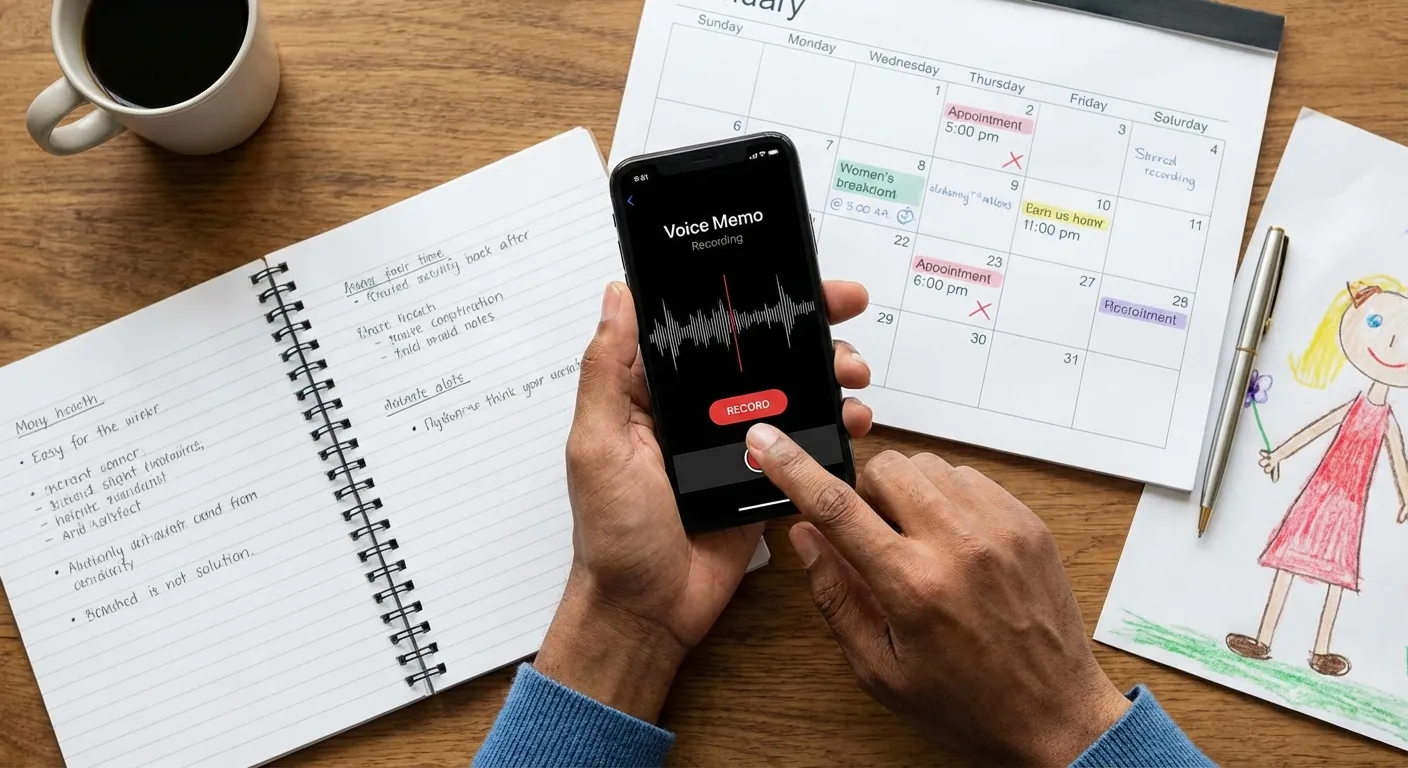
Here are seven essential strategies to create an ironclad record and combat your ex’s tactics:
- Mandate a Single Channel for Written Communication. The first and most important boundary is to move all substantive conversations to a written format. Inform your co-parent, “To ensure we’re both clear and on the same page, please send all non-emergency requests and updates regarding the children via email (or a co-parenting app).” Stick to this relentlessly. If they try to discuss something in person, simply say, “Great, can you send that to me in a message so I have it for my records?”
- Use a Dedicated Co-Parenting App. This is the gold standard for documentation. Apps like BestInterest are designed for high-conflict situations. Communications are time-stamped, un-editable, and securely stored. If you need to go to court, you can easily generate Verified Reports. Crucially, with features like Solo Mode, you can use the app to document and manage communication even if your co-parent refuses to join, giving you a private, verifiable record.
- Confirm Every Verbal Agreement in Writing. Sometimes a verbal conversation is unavoidable (e.g., at a pickup). Immediately afterward, send a follow-up message. A simple, “Just to confirm our conversation a few minutes ago, you will be picking up Johnny at 4 PM on Saturday. Please let me know if this is not correct,” creates a written record they must either confirm or dispute. Their silence can be seen as an agreement.
- Avoid Standard Text Messaging. While better than a verbal conversation, text messages can be problematic. They can be deleted, easily manipulated with screenshots taken out of context, and are difficult to organize and present as evidence. A secure co-parenting app is always superior.
- Keep a Private Co-Parenting Journal. Beyond direct communication, keep a personal log of events. Use a feature like the BestInterest Coparenting Journal to note late drop-offs, missed calls, or the impact of your ex’s behavior on the children. This helps you see patterns over time and provides crucial context to your formal records.
- Organize Your Records Meticulously. Whether you use an app or email, keep your records organized. Create folders for different categories like “Schedule Changes,” “Medical Information,” and “Expenses.” This makes it easy to find a specific piece of information quickly when your ex tries to claim something was never discussed.
- Be Unfailingly Consistent. Document everything. Every single time. The power of documentation lies in its consistency. When your ex realizes that every single conversation is being logged and confirmed in writing, the tactic of weaponized forgetfulness loses its power. They can’t argue with a timestamped message.
Communication Boundaries: Setting Limits with a High-Conflict Ex
Documentation is your shield, but boundaries are your sword. You must teach your ex how you will be treated by defining and enforcing clear communication limits. This is not about being difficult; it’s about creating a safe and predictable environment for yourself and your children. A high-conflict person thrives on chaos and emotional reactions. Your goal is to become as boring and unresponsive to drama as possible.
First, adopt the BIFF method for all your responses: Brief, Informative, Friendly, and Firm. Answering a long, rambling, accusatory email with a simple, “Thanks for the information. I will have the kids ready for pickup at 6 PM on Friday as scheduled,” gives them nothing to argue with. It’s polite, it’s boring, and it ends the conversation.
Second, establish clear rules of engagement:
- Set Communication Hours: You do not need to be available 24/7. Decide on reasonable hours (e.g., 9 AM to 7 PM) during which you will check and respond to non-urgent messages. Communicate this boundary: “I will be checking messages twice a day, in the morning and evening. For any true emergencies, please call.” Tools like BestInterest offer Smart Silence, and on Protect and Protect Plus Message Shield filters out hostile messages while urgent ones still reach you.
- Refuse to Engage with Hostility: This is where technology can be a lifesaver. Tools like BestInterest’s Message Shield can automatically hide manipulative, abusive, or profane language from your ex’s messages. The content is still documented if you need it for court, but you don’t have to see it. This preserves your mental peace and prevents you from being emotionally triggered.
- Use a Tone Check on Your Own Messages: Before you hit send on a reply, especially when you feel activated, use a tool like Tone Guardian. It analyzes your message for emotional language and helps you rephrase it to be neutral and business-like. This prevents you from accidentally escalating the conflict and ensures your side of the record is always calm and child-focused.
Reclaiming Your Narrative: Protecting Your Mental Health and Co-Parenting Peace
Dealing with weaponized forgetfulness is emotionally and mentally exhausting. The constant gaslighting can erode your self-esteem and make you feel isolated. Reclaiming your peace is just as important as documenting communication.
Practice radical self-compassion. Your ADHD is not a moral failing. Your brain is wired differently, and that is okay. Stop apologizing for it. Instead of saying, “I’m sorry, I’m so forgetful,” shift your mindset to, “That’s why I require all schedule changes to be in writing.” Frame your systems not as a crutch for a weakness, but as a professional and effective way to manage complex co-parenting logistics.
Build a strong support system. Connect with friends, family, or a therapist who understands both ADHD and high-conflict relationships. You need people in your corner who will validate your reality and remind you that you are not crazy. Explaining the dynamic of weaponized forgetfulness to your support system can help them understand the specific type of manipulation you’re facing.
Ultimately, by implementing these strategies, you shift from a reactive, defensive position to a proactive, empowered one. You are no longer a victim of your ex’s manipulations. You have a system. You have boundaries. You have an undeniable record of the truth. The peace that comes from this control is immeasurable, not just for you, but for your children, who need a calm, stable, and confident parent. Your ADHD does not have to be a weakness; with the right tools and strategies, your need for structure and clarity can become your greatest strength.
Resources
- Information on Adult ADHD - CHADD
- Gaslighting: What It Is and Why It’s So Damaging
- The Importance of a Coparenting Journal
- BIFF Responses for High-Conflict Co-Parenting
Frequently Asked Questions
What is weaponized forgetfulness in co-parenting? Weaponized forgetfulness is a manipulative tactic where one co-parent intentionally exploits the other’s known memory issues, often related to ADHD, to create confusion, evade responsibility, and gain control. This includes denying conversations, changing plans and claiming they were always that way, and blaming the other parent for being ‘unreliable’.
How can I prove my ex is lying when they use weaponized forgetfulness? The most effective way to counter this tactic is with meticulous, consistent documentation. Insist on all communication being in a written format, preferably through a secure co-parenting app that creates an unalterable, time-stamped record. This replaces fallible memory with undeniable proof.
Is my ADHD a liability in a custody case? ADHD is a medical condition, not a character flaw. While an ex may try to portray it as a liability, family courts are primarily concerned with a parent’s ability to provide a safe and loving environment. By using documentation systems and organizational tools, you can demonstrate that you have effective strategies in place to manage your ADHD and are a responsible, capable parent.
How do I stop feeling crazy when my ex gaslights me about my memory? Ground yourself in your record of truth. When your ex tries to manipulate you, instead of engaging in an argument, refer to your documented communications. Building a support system of friends, family, or a therapist who understands the situation is also crucial for validating your reality and protecting your mental health.
What is the best way to communicate with a manipulative co-parent? The best communication is documented, brief, and emotionally neutral. Use a co-parenting app to create a formal record. Keep your messages focused strictly on the logistics of parenting (the BIFF method: Brief, Informative, Friendly, Firm). Refuse to engage in personal attacks, arguments, or discussions about the past.