When Winning Means Losing: How High-Conflict Co-Parenting In Family Court

When your co-parent treats court as a scoreboard, refuse the game: document instead of debating, communicate only what's necessary, stay grounded in reality, and protect your energy. Redefine winning as your child's stability — because a courtroom victory that costs their well-being is a loss.
Have you ever felt like your co-parent is less interested in raising your child and more obsessed with defeating you? For many parents navigating high-conflict custody disputes, the courtroom becomes less about solutions — and more about scorekeeping.
Family court is supposed to protect children’s best interests. But when a high-conflict or narcissistic co-parent gets involved, it often turns into something darker — a game of power, ego, and endless retaliation.
Why “Winning” Becomes the Goal
In healthy co-parenting, both parents understand that cooperation leads to better outcomes for their child. But for a high-conflict co-parent, the legal system can feel like the ultimate weapon — a way to control, punish, or drain you emotionally and financially.
These parents thrive on the fight. The pattern is called legal abuse, and they use court filings, restraining orders, and endless “emergency” motions as tools of intimidation. For them, “winning” isn’t about the child’s well-being — it’s about feeding their need for dominance.
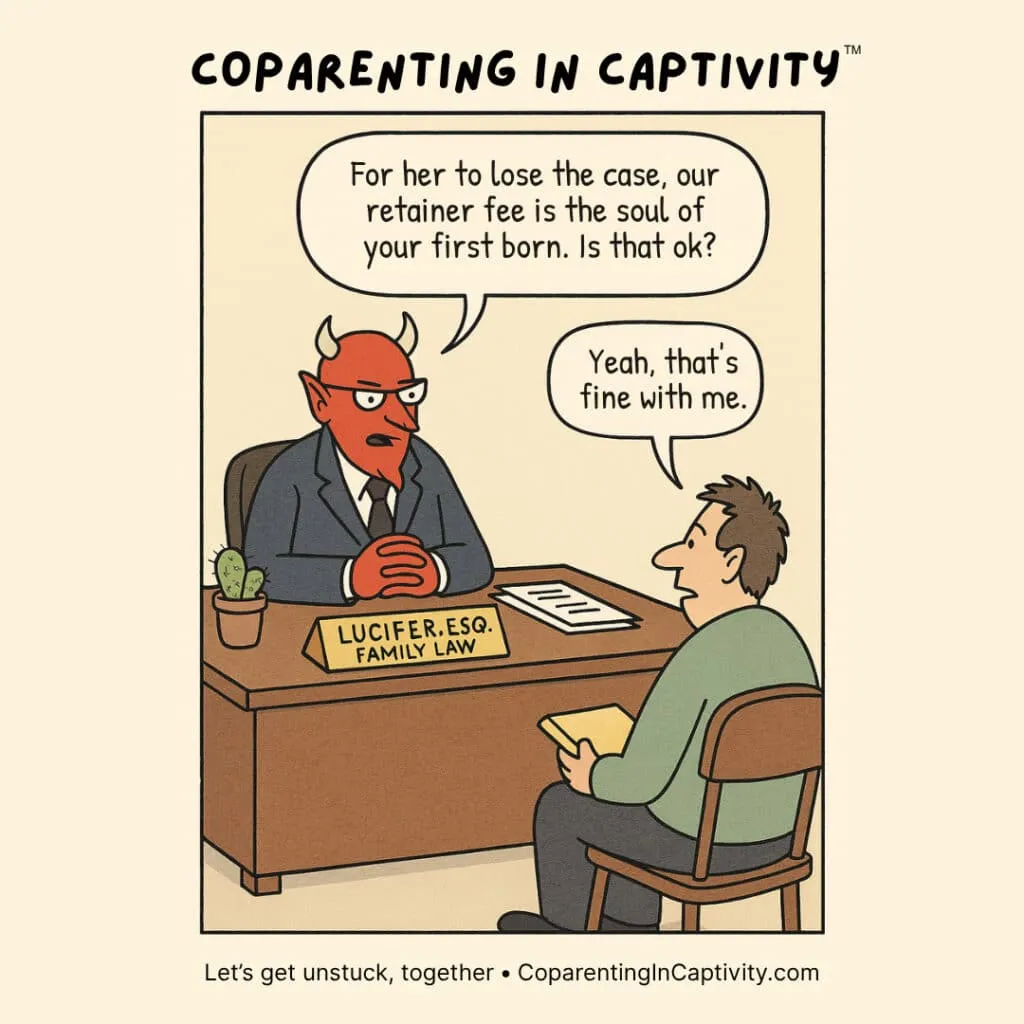
As Dr. Ramani Durvasula often explains, narcissistic personalities crave validation and control. Court battles give them both — public attention, emotional fuel, and a sense of superiority when they “win,” even if the victory destroys trust, stability, and resources.
The Real Cost of the Legal Battlefield
When one parent is using the system to “win,” the other parent often ends up losing far more than just money.
The costs include:
- Emotional exhaustion: Constant court threats keep you in fight-or-flight mode.
- Financial depletion: Legal fees can skyrocket, draining savings and future security.
- Damage to your child’s stability: Every conflict delays healing and creates emotional confusion.
The irony? Even when you “win” a legal motion, you might lose your peace — and your child may lose a sense of safety in the process.
How to Stay the Course When Your Co-Parent Uses Court as a Weapon
When your co-parent is using the legal system as a tool of control, the best thing you can do is step out of the game — emotionally, not legally. That means playing a different kind of strategy: one based on calm, clarity, and evidence.
1. Document, Don’t Debate
Respond to provocations with facts, not feelings. Every message, schedule change, or missed pickup should be recorded — not argued. This keeps your case strong and your stress lower.
BestInterest’s Verified Message Reports and Message Shield (Protect and Protect Plus) make this easier by automatically filtering inflammatory language and compiling messages into clear, court-ready summaries.
2. Communicate Only What’s Necessary
Parallel parenting — minimizing contact and keeping communication strictly about the child — is often the best route when cooperation isn’t possible. You can’t reason with someone who’s invested in chaos, but you can protect your peace.
3. Stay Grounded in Reality
Your co-parent’s tactics are meant to wear you down. Don’t take the bait. Keep perspective: judges and mediators see through manufactured drama more often than you think. Focus on being consistent, calm, and child-centered.
4. Protect Your Energy
Boundaries aren’t just emotional — they’re strategic. Take breaks from reading messages. Use tools like Smart Silence in BestInterest to control when you receive notifications, and on Protect and Protect Plus let the app filter out inflammatory content so you can respond on your terms.
Redefining “Winning”
At the end of the day, “winning” in family court isn’t about getting every motion approved or every argument heard. It’s about building stability, protecting your child’s emotional world, and preserving your own peace.
Walking away from drama, maintaining composure, and letting the truth speak for itself — that’s what real victory looks like. And you’re helping teach your children how to handle conflict in a healthy way.
How You Play Is Up To You
You can’t control a co-parent’s obsession with “winning.” But you can refuse to play their game.
When you focus on peace, documentation, and your child’s well-being — not revenge — you win every time that actually matters.
Family court doesn’t define your worth — your calm does.
Frequently asked questions
Why does my co-parent treat court like a game to win?
For high-conflict personalities, litigation becomes scorekeeping: defeating you replaces raising the child as the goal. Court's adversarial structure rewards the framing. Recognizing that 'winning' is the motive explains filings that make no parenting sense.
How do I survive a co-parent who weaponizes family court?
Four disciplines: document instead of debating, communicate only what's necessary, stay grounded in reality — their filings describe a fictional you — and protect your energy for the long game. You can't stop the filings; you can starve them of material and drama.
What does winning actually look like in a custody battle?
Redefine it: your child's stability, your integrity intact, and a record that speaks for itself. A courtroom victory purchased with your child's well-being is a loss. How you play is up to you — and playing steady beats playing to win.