
The Go-Bag No One Talks About: Your Critical Leaving a Narcissist Checklist

Before leaving a narcissist, build a go-bag: critical documents in five categories, burner financial and communication essentials, the sentimental items they'll weaponize, and safely exported digital evidence. Plan it like the covert operation it is — safety first, always.
That knot in your stomach isn’t just anxiety; it’s a survival instinct. Planning to leave a narcissistic partner, especially when you share children, feels less like a breakup and more like planning a covert operation. You feel isolated, controlled, and exhausted. Please know this: you are not imagining it, and you are not alone. The emotional, financial, and psychological abuse you’ve endured is real, and the fear of what comes next is completely valid. But that fear doesn’t have to paralyze you. It can be channeled into a powerful, protective strategy. This is where your escape plan begins, with a comprehensive leaving a narcissist checklist—a “go-bag” for your entire future, not just a single night.
This isn’t just about packing a suitcase. It’s about methodically reclaiming the pieces of your life that your partner has systematically tried to control: your identity, your financial stability, your memories, and your peace of mind. Preparing this go-bag is your first, most critical step toward freedom and building a safe, stable new life for you and your children.
Why Every Co-Parent Needs a “Go-Bag” Before Divorce
Leaving a narcissist is a strategic extraction, not an emotional departure. Narcissistic individuals thrive on control, and when they sense that control slipping, they often escalate their manipulative and destructive behaviors. They may hide financial assets, destroy important documents, drain bank accounts, or launch a vicious smear campaign to alienate you from your children and community. They see the divorce process not as a legal dissolution of a partnership, but as a final battle to be won at all costs.
Your go-bag is your strategic advantage. It is a curated collection of documents, resources, and essentials that protects you from this predictable sabotage. By preparing in advance, you are not being paranoid; you are being prudent. You are:
- Protecting Your Legal Rights: Without access to key documents, you are at a severe disadvantage in court proceedings for custody and asset division.
- Securing Your Financial Future: You are ensuring you have the funds and financial identity to start over without being financially starved into submission.
- Preserving Evidence: You are safeguarding the proof of their behavior, which can be crucial in family court.
- Safeguarding Your Children’s Well-being: By securing their essential documents and creating a stable exit plan, you are minimizing the chaos and trauma they experience.
Think of this checklist as the foundation of your new, independent life. Each item you gather is a brick you lay for a safer, more peaceful future.
Securing Your Critical Documents: The Unseen Hostage Takers
Documents are power in a divorce. To a narcissist, they are hostages—leverage to be used against you. They know that without proof of identity, assets, or income, you are hamstrung. Before you even hint at leaving, you must begin to quietly gather and secure these items. Make digital copies of everything (scan them or take clear photos with your phone) and save them to a secure cloud drive (like Google Drive or Dropbox) under a new, private email address. Make physical copies and store them outside of your home—at a trusted friend’s house, with a family member, or in a safe deposit box they cannot access.
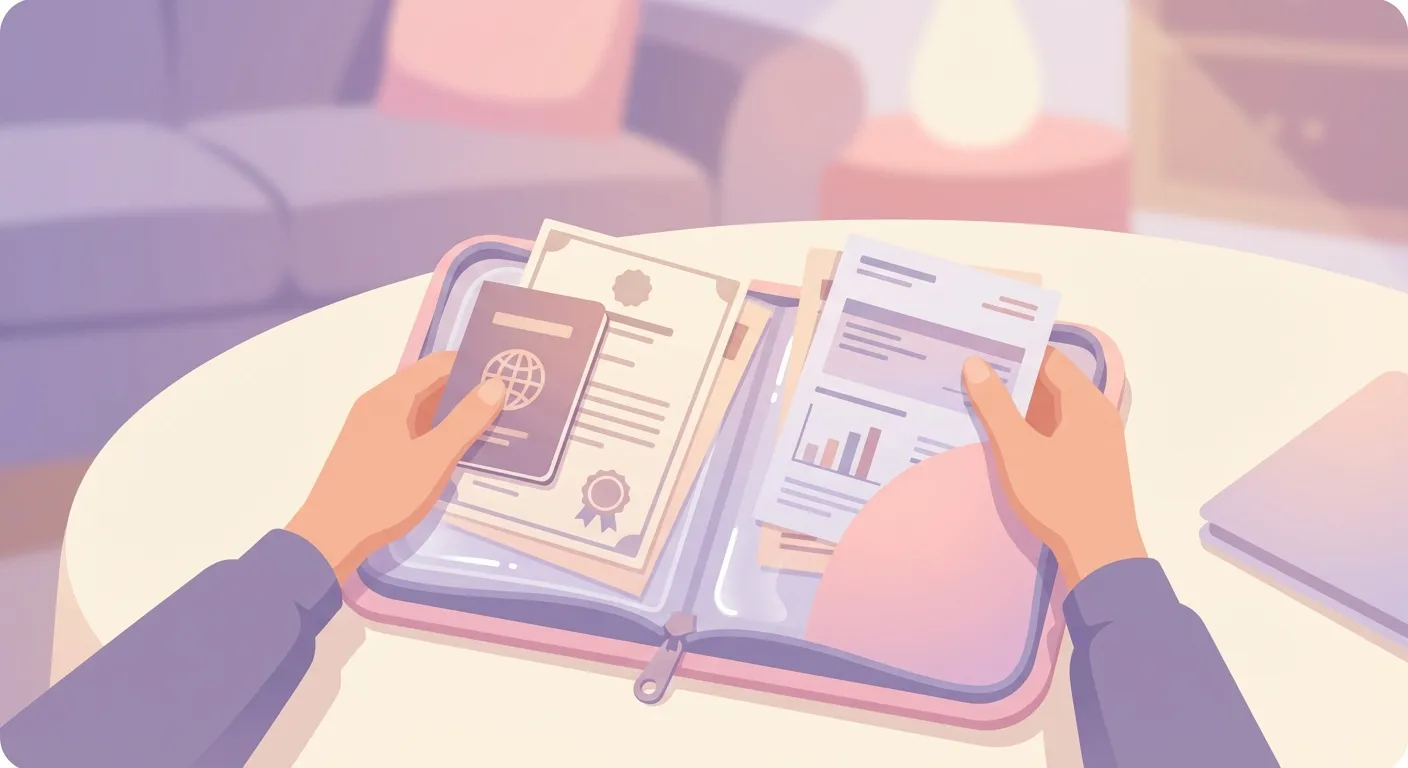
5 Essential Document Categories for Your Divorce Go-Bag
- Personal and Children’s Identification: These are the non-negotiables for establishing your identity and your children’s. A narcissist may hide or threaten to destroy these to prevent you from traveling, opening bank accounts, or enrolling your children in a new school.
- Your driver’s license or state ID
- Your Social Security card
- Your birth certificate
- Your passport
- Children’s birth certificates, Social Security cards, and passports
- Financial Records: Financial abuse is a hallmark of narcissistic control. You need a clear picture of the marital financial landscape to ensure a fair settlement. Gather at least the last three to five years of records.
- Bank account statements (checking, savings, investment)
- Tax returns (personal and business)
- Pay stubs for both you and your partner
- Credit card statements
- Mortgage statements and loan documents
- Retirement account and 401(k) statements
- Vehicle titles and registration
- Legal and Property Documents: These documents define your legal relationship and marital estate.
- Marriage certificate
- Any prenuptial or postnuptial agreements
- Deeds to any real estate
- Wills, trusts, and power of attorney documents
- Life insurance policies
- Car insurance policies
- Children’s Essential Records: You will need these for everything from school registration to medical appointments.
- School and academic records
- Medical records, including vaccination history
- Contact information for doctors, dentists, and therapists
- Evidence of Abuse and Behavior: This is often the most challenging but most crucial category. Family courts are increasingly aware of coercive control, but you need documentation. This is where a narcissist’s own words can become your most powerful evidence. Keep a detailed log of incidents, with dates, times, and what happened. Save abusive emails and text messages. This is precisely why tools designed for high-conflict co-parenting are so vital. Apps that offer Verified Reports can transform chaotic, abusive messages into organized, verifiable evidence for your attorney and the court, making your case stronger and your reality clearer.
Building Your “Burner” Essentials: Financial Freedom & Communication
Once your documents are secure, the next step in your leaving a narcissist checklist is to create a private lifeline—a set of tools that your partner doesn’t know about and can’t control.
Establish Financial Independence Secretly:
- Open a new bank account: Go to a completely different bank than the one you use jointly. Open a checking and savings account in your name only. Use a P.O. box or a trusted friend’s address for the statements. Start quietly diverting small amounts of money if you can—your cash back from groceries, a portion of your paycheck if it’s directly deposited into a joint account. Document everything: This is not about being deceitful or stealing money; it’s about securing a financial safety plan.
- Secure a credit card: Apply for a credit card in your name only. This will be crucial for emergencies and for building your own credit history. Have the card mailed to a safe address.
- Stash emergency cash: A narcissist can freeze joint accounts in an instant. Having a hidden stash of cash can pay for gas, a hotel room, or food in those critical first few days.
Create a Secure Communication Channel:
- Get a new phone and email: Purchase a low-cost prepaid phone (a “burner phone”) and set up a new email address with a provider like Gmail or ProtonMail. Use this for all communication related to your escape plan—contacting lawyers, therapists, support networks, and looking for new housing. Do not link it to any existing accounts.
- Change your passwords: Systematically change the passwords to all your personal accounts: social media, primary email, online banking, everything. Use strong, unique passwords and enable two-factor authentication wherever possible. Assume your partner knows all of your current passwords and can access your phone.
Protecting Your Sentimental Leverage: Items They’ll Weaponize
A narcissist understands that some things are more valuable than money. They know what you cherish, and in a conflict, they will not hesitate to hold those items hostage, or even destroy them, to inflict the deepest possible pain. Part of your go-bag must include these irreplaceable sentimental items. Long before you leave, start quietly removing them from the house.
Consider securing items like:
- Irreplaceable family heirlooms passed down through generations.
- Photographs of deceased loved ones or from your childhood.
- Your personal journals or diaries.
- Your children’s most precious keepsakes, like their first blanket or special drawings.
- Any jewelry or gifts that have deep personal meaning.
Pack them carefully and give them to a trusted friend or family member for safekeeping. Do not tell your partner where they are. Removing this leverage is a crucial step in protecting your heart from their calculated cruelty.
Leverage Coparenting Apps: Exporting Your Digital Evidence Safely
Proving emotional abuse and coercive control can feel impossible. It’s often a case of “he said, she said,” and narcissists are masters of presenting a calm, charming facade to the outside world. This is why documented communication is your most powerful tool. The constant barrage of manipulative texts, harassing emails, and veiled threats is not just noise—it’s evidence.
This is where an app like BestInterest becomes an essential part of your legal strategy. It’s designed specifically for this reality. With Solo Mode, you can begin using the platform to document everything even if your co-parent refuses to join. You can log every interaction, upload screenshots of past messages, and keep a timestamped Coparenting Journal of every event. When they do send messages through the app, Message Shield (Protect and Protect Plus) filters out the abusive language so you don’t have to read it, while preserving the original, unaltered message as evidence. This protects your mental health while building your case. When it’s time for court, you can generate clean, un-editable, Verified Reports that present a clear and undeniable pattern of behavior to your lawyer and the judge.
Your Safety First: Leaving a narcissist checklist
Your leaving a narcissist checklist and go-bag are instruments of liberation, but your physical and emotional safety is the ultimate priority. The most dangerous time for a victim of abuse is often the point of separation.
Your go-bag is part of a larger safety plan. This plan should also include:
- A Safe Destination: Know exactly where you are going, whether it’s a friend’s house, a family member’s home, or a domestic violence shelter. Have a backup plan as well.
- A Trusted Confidant: Tell at least one person you trust about your plan, including when you plan to leave and where you are going. Give them a code word to signal you are in trouble.
- Professional Support: Contact the National Domestic Violence Hotline or a local shelter. They can help you create a detailed, personalized safety plan and connect you with legal and emotional resources.
- Legal Protection: Speak to a family law attorney who has experience with high-conflict personalities and narcissistic abuse. They can advise you on the best time to file for divorce and whether a restraining order is necessary to protect you and your children. Avoid the trap of hiring a “bull dog attorney” which may just be inviting another narcissist into your life.
Leaving is a brave and monumental step. By preparing methodically, you are not just escaping a toxic situation; you are stepping into your power and taking control of your future. You are doing this for yourself, and you are doing it for your children. You deserve peace, and you can achieve it.
Resources
- The National Domestic Violence Hotline
- Narcissism | Psychology Today
- How to Prove Parental Alienation in Court
- Safety Planning | WomensLaw.org
- What is Coercive Control and How Does it Affect Co-Parenting?
Frequently Asked Questions
What is a go-bag for leaving a narcissist? A go-bag for leaving a narcissist is more than a physical bag; it’s a comprehensive collection of essential documents, financial resources, evidence of abuse, and personal items. This leaving a narcissist checklist is designed to help you safely exit the relationship and protect your legal, financial, and parental rights during a divorce or separation.
How do I secretly save money to leave my narcissistic partner? Open a new bank account at a different bank in your name only, using a safe address like a P.O. box. If possible, have a portion of your paycheck deposited there. Other methods include getting cash back during grocery shopping, selling personal items your partner won’t notice, or doing freelance work for direct payment. Everything should be documented as any cash prior to divorce is considered community property - you are securing access, not stealing from community property.
What evidence do I need to prove narcissistic abuse in court? Document everything. Keep a detailed journal of incidents with dates and times. Save all harassing or manipulative text messages, emails, and voicemails. Use a co-parenting app to create a verifiable record of communication. Third-party witness testimony and reports from therapists or police can also be powerful evidence.
When is the safest time to leave a narcissist? The safest time to leave is when the narcissist is not home and you have a well-thought-out safety plan in place and your leaving a narcissist checklist complete. Inform a trusted friend of your plan, have your go-bag ready, and go directly to your predetermined safe location. Avoid telling the narcissist you are leaving in person, as this can trigger a dangerous reaction.
How can I protect my children when leaving a narcissistic co-parent? Secure all their essential documents (birth certificates, passports, social security cards, medical records). Have a custody plan in mind and consult with a lawyer who understands high-conflict divorce. Use a a co-parenting app like BestInterest to minimize conflict and create a record of all interactions regarding the children.
Related reading
-

Weaponized Forgetfulness: How to Disarm Your Ex and Protect Your Peace
-

The Pain of a Text: How to Master Rejection Sensitive Dysphoria with a Toxic Ex
-

The "Remote Control" Trick: Calm Your Child's Transition Day Anxiety
-

Why Your High-Conflict Ex Thrives on Change and How to Stop Co-parenting Boundary Violations